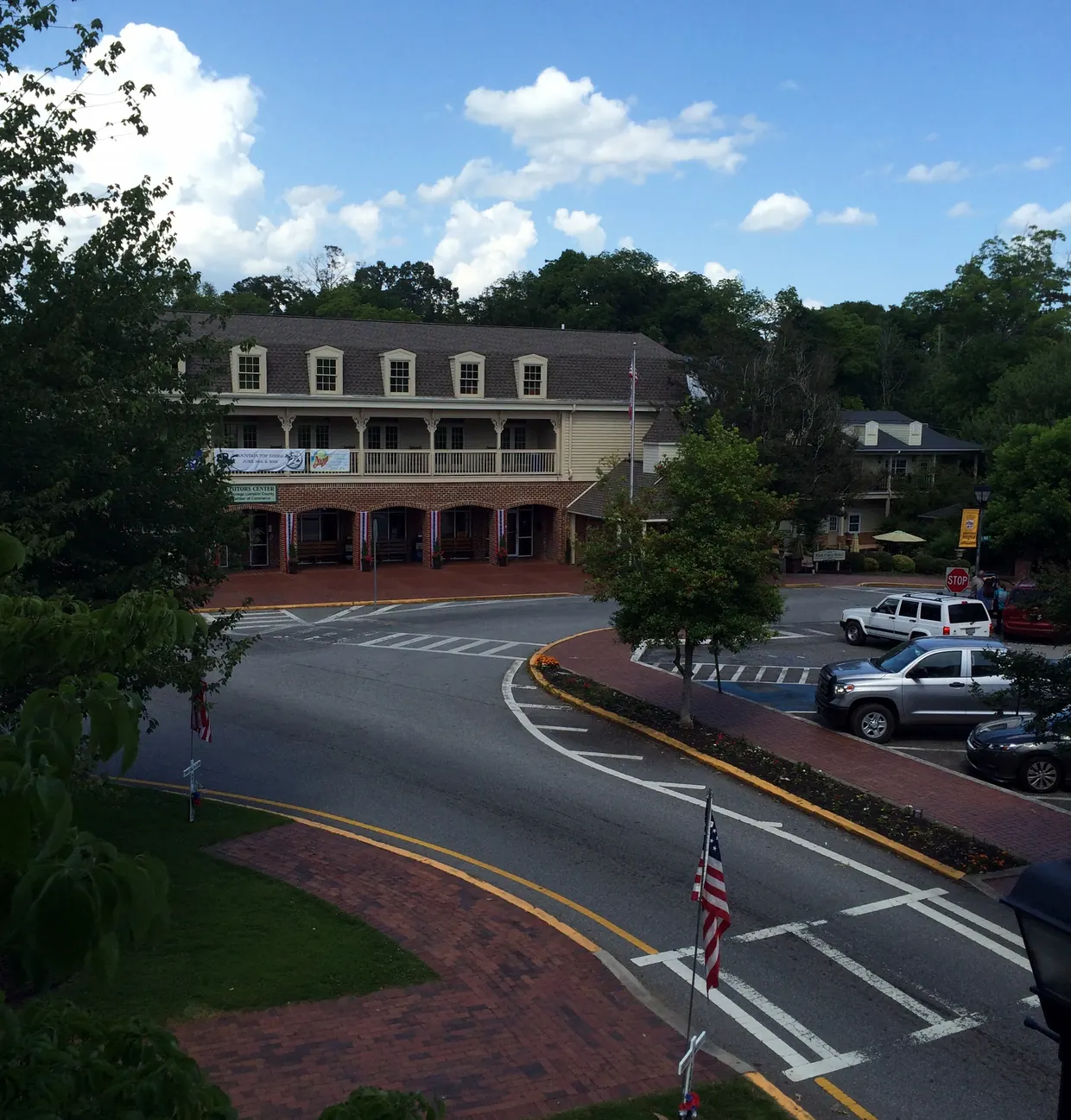
A listing’s property type is typed in by a person. Two homes that look alike from the street, with shared walls and an association, can be two different kinds of ownership under Georgia law. The difference shows up later in your loan, your insurance policy, your rental plans and what the association can do when dues go unpaid. This guide explains the difference and how to check it for any Dahlonega address.
What makes a condo a condo in Georgia
The Georgia Condominium Act
- Georgia's condominium law is the Georgia Condominium Act, O.C.G.A. § 44-3-70 and following sections. Official Code of Georgia (via FindLaw), checked 2026-10-19
- A 'condominium unit' is the unit itself plus the undivided interest in the common elements that goes with it. Official Code of Georgia (via FindLaw), checked 2026-10-19
- Under Georgia law, property is not a condominium unless the unit owners hold undivided interests in the common elements. Official Code of Georgia (via FindLaw), checked 2026-10-19
The key words are “undivided interest.” In a condominium you do not own a slice of the land under your unit. You own the space of your unit, and together with every other owner you share the land, the roofs, the outside walls and the grounds. Those shared parts are the common elements.
Common elements
- Common elements are every part of the condominium that is not a unit. Official Code of Georgia (via FindLaw), checked 2026-10-19
- A limited common element is a part of the common elements reserved for one or more (but not all) units, such as an assigned balcony or parking space where the declaration says so. Official Code of Georgia (via FindLaw), checked 2026-10-19
A limited common element is still shared property in law, but the declaration reserves it for your unit. A balcony or an assigned parking space is the usual example. You use it; the association usually controls repairs and rules for it.
A Georgia condominium comes into existence when its declaration and the required plats and plans are recorded. (Official Code of Georgia (via FindLaw), checked 2026-10-19)
That last point is the one that matters most to a buyer. A condominium does not exist because a listing, a sign or a sales flyer says so. It exists because the instruments were recorded at the courthouse.
What a fee-simple townhome is
The other law
- Townhome and subdivision HOAs that opt in are governed by a different law, the Georgia Property Owners' Association Act (O.C.G.A. § 44-3-220 and following). Official Code of Georgia (via FindLaw), checked 2026-10-19
- Under the POA Act, owners own a 'lot' shown on a recorded subdivision plat; in a condominium they own a 'unit' plus an undivided share of the common elements. That is the core legal difference between a fee-simple townhome in an HOA and a condo. Official Code of Georgia (via FindLaw), checked 2026-10-19
In a fee-simple townhome you own a lot shown on a recorded subdivision plat, and the building on it. The lot lines often run through the shared walls. A homeowners association may own the common areas and collect dues, but you are not a co-owner of the whole property the way a condo owner is. Some townhome associations opted into the Property Owners’ Association Act; others run only under their recorded covenants.
Side by side
| Question | Condominium | Fee-simple townhome |
|---|---|---|
| What you own | Your unit plus an undivided share of the common elements | A lot on a recorded plat and the building on it |
| Georgia law | Georgia Condominium Act | Recorded covenants, and the Property Owners’ Association Act if the community opted in |
| Association name | Must include “condominium association” or “unit owners’ association” | Often “homeowners association”; no required wording |
| Founding document | Recorded declaration with plats and plans; the condo’s name includes “condominium” | Recorded plat and declaration of covenants |
| Who insures the building | The association’s master policy, by statute | Read the covenants; often the owner |
| Your own policy | HO-6 (unit owner) policy | Usually a homeowner policy that covers the structure |
| Loan review | Lenders review the condo project as well as you | Ask your lender; condo project rules are written for condominiums |
| Unpaid dues | Statutory lien that ranks ahead of most other liens | Similar statutory lien if the community is under the POA Act |
Behind the table
- A Georgia condominium association must be incorporated before the declaration is recorded, and its corporate name must include 'unit owners' association' or 'condominium association'. Every unit owner is automatically a member. Official Code of Georgia (via FindLaw), checked 2026-10-19
- A Georgia condominium declaration must give the condominium a name that includes the word 'condominium' or is followed by 'a condominium'. Official Code of Georgia (via FindLaw), checked 2026-10-19
- The association must carry property insurance at full replacement cost on all buildings, including common elements, foundations, roofs, exterior walls, windows and doors, and (for each unit) the HVAC, drywall, and original-grade floors, cabinets, plumbing and electrical fixtures and kitchen/laundry appliances. Official Code of Georgia (via FindLaw), checked 2026-10-19
- POA Act associations get a similar statutory assessment lien that ranks behind property taxes and a first-priority mortgage. Official Code of Georgia (via FindLaw), checked 2026-10-19
Why the difference matters to you
Financing
With a condo, the lender looks at the project as well as the borrower. FHA, VA and conventional lenders each have project tests, and Dahlonega has very few condos on the federal lists. Our FHA, VA and conventional guide shows what the HUD and VA lists say today. A fee-simple townhome is usually underwritten more like a house, but ask your lender before you assume it.
Fannie Mae waives the full project review (basic requirements still apply) for detached condo units and for units in two- to ten-unit condo projects not part of a larger development or master association. (Fannie Mae Selling Guide, checked 2026-10-19)
Insurance
In a condo, Georgia law puts the building on the association’s master policy and you buy an HO-6 policy for the rest. In a townhome, the covenants decide, and the owner often insures the whole structure. Getting this wrong means either paying twice or being uninsured for the walls. See condo insurance and HO-6.
Dues and liens
Unpaid condo assessments are a personal debt of the owner and a lien on the unit that ranks ahead of all other liens except property taxes, a first-priority mortgage (and mortgages recorded before the declaration), the lessor's lien under § 44-3-86, and certain secondary purchase-money mortgages. (Official Code of Georgia (via FindLaw), checked 2026-10-19)
Condo assessments carry a strong statutory lien. Before closing, ask the association for a statement of any unpaid assessments on the unit. Condo dues and reserves explains what to request.
Rentals
In a condo, any rental limits sit in the declaration and its recorded amendments, and owners can change them by vote. City or county licensing does not override them. See short-term rental rules.
How to check a Dahlonega listing
- Open the parcel on qPublic Lumpkin County and read the legal description. Condo parcels usually name the condominium and a unit number. A lot and block number points toward a subdivision.
- Search the association on the Georgia Secretary of State register. A condo association’s corporate name must say “condominium association” or “unit owners’ association.” A “homeowners association” is not proof either way, but it is a reason to ask.
- Ask the listing agent or the closing attorney for the recorded declaration. Its name should include the word “condominium.”
- Check whether the parcel record shows its own acreage for the unit. That is unusual for a condo, and a reason to read the declaration rather than guess.
- Ask your lender which review applies before you set your loan type in the offer.
Our Is it really a condo? tool walks through these checks, and is that listing really a condo shows the common mix-ups.
What we found in Dahlonega
The Census geocoder places The Summit of Dahlonega (315 Summit Dr), Ida's Place (119 Boyd Cir) and Crown Mountain Place inside the Dahlonega city limits. (U.S. Census Bureau Geocoder, checked 2026-10-19)
Only two of those are residential: The Summit of Dahlonega and Ida’s Place. Crown Mountain Place is an office and commercial condominium. At Ida’s Place the county record gives each unit its own small acreage, so confirm the legal form from the declaration before you rely on it. Both complexes are described on Dahlonega condo complexes.
No Georgia Secretary of State condominium association with a Dahlonega address was found for 'Brookstone', 'Rock Pointe' or 'HawksNest/Hawks Nest' on Oct. 19, 2026. (Georgia Secretary of State, checked 2026-10-19)
That does not tell you what those communities are. It tells you the “condo” label on a listing there needs checking with the recorded documents before you write an offer around it.
Questions buyers ask
What makes a property a condominium in Georgia?
Under the Georgia Condominium Act, property is a condominium only if the owners hold undivided interests in the common elements, and it comes into existence when its declaration, plats and plans are recorded.
What is the difference between a condo and a townhome in Georgia?
In a condominium you own a unit plus an undivided share of the common elements. In a townhome community under the Property Owners’ Association Act, you own a lot shown on a recorded subdivision plat.
Next step
Run the address through Is it really a condo?, then use the condo buyer checklist for the rest of your due diligence.
Rules, rates and approvals change. Every rule on this page links to the office or statute that sets it; confirm with that source before you rely on it.